Problem
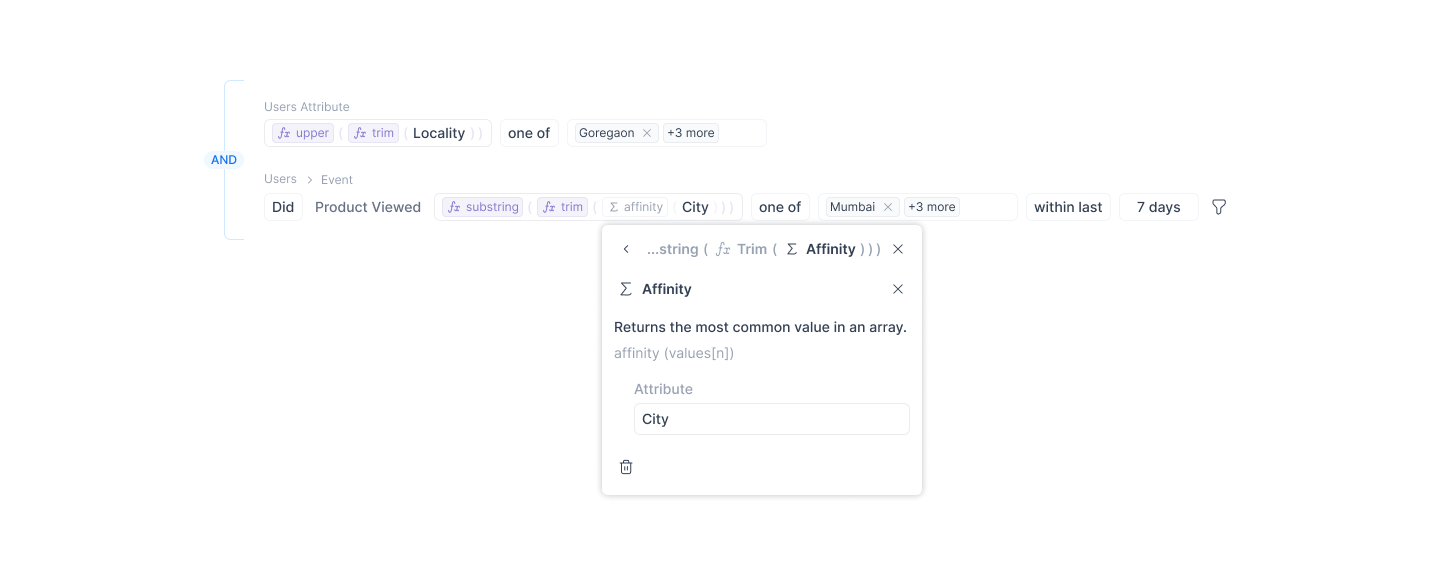
WebEngage's Segment Builder allows marketers to create highly targeted audiences using user attributes, events, behavioral data, and other criteria. But real-world data isn't always ready to use as it is.
A date might need to be broken down into a month or year. Strings may need to be transformed before comparison. Two values may need to be calculated against each other. Previously, solving these problems could require additional attributes, data preparation, or technical intervention.
Challenge
How do we introduce powerful data transformations into an already complex visual criteria builder without making it feel like a developer tool?
Solution
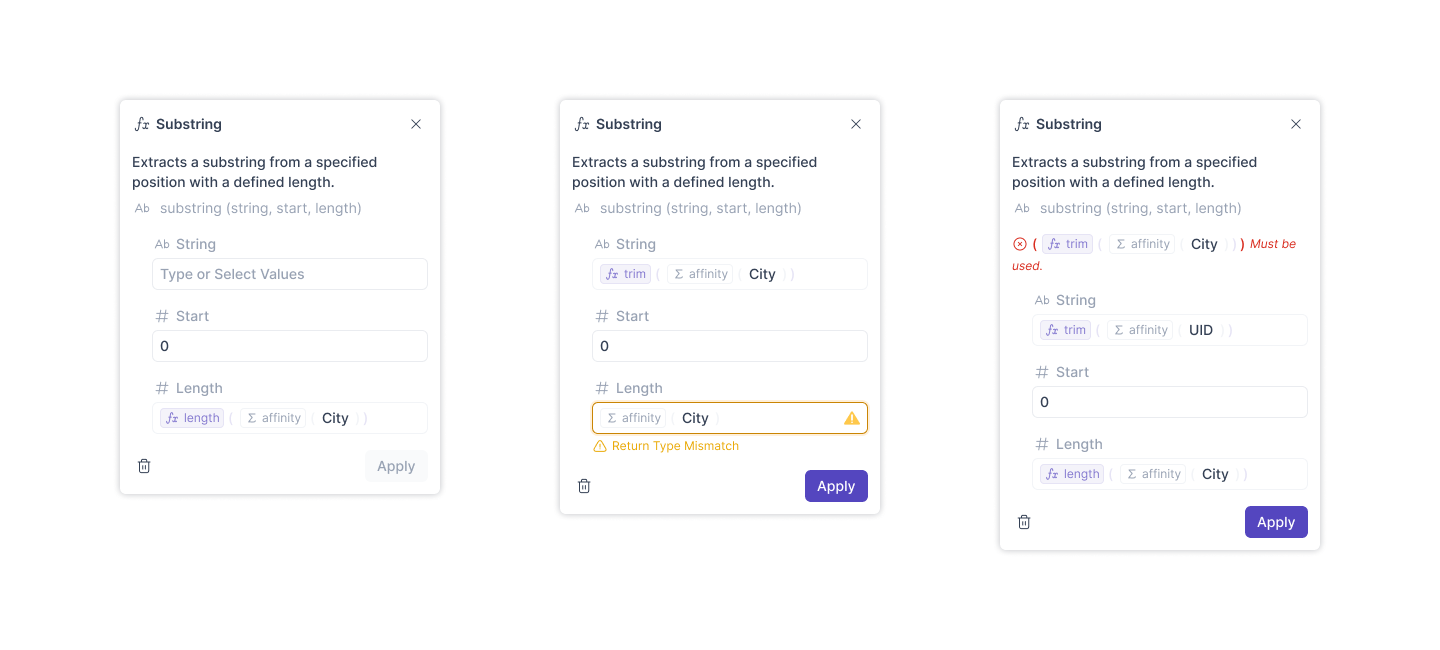
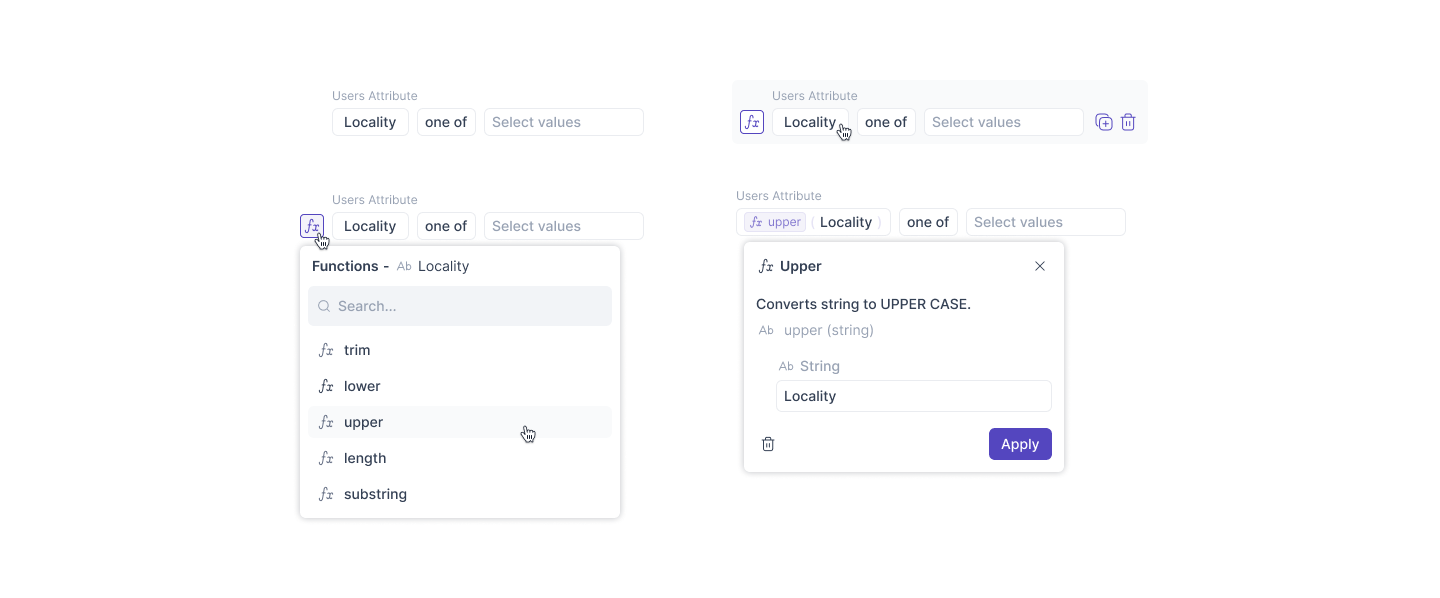
I designed Functions as an extension of the existing criteria-building experience, allowing users to transform values directly where they define their segmentation rules.
Users can now:
- Transform and extract string values
- Extract information from dates and timestamps
- Perform date calculations
- Use dynamic values such as Today and Now
- Apply functions to user attributes, event aggregates, and event attributes
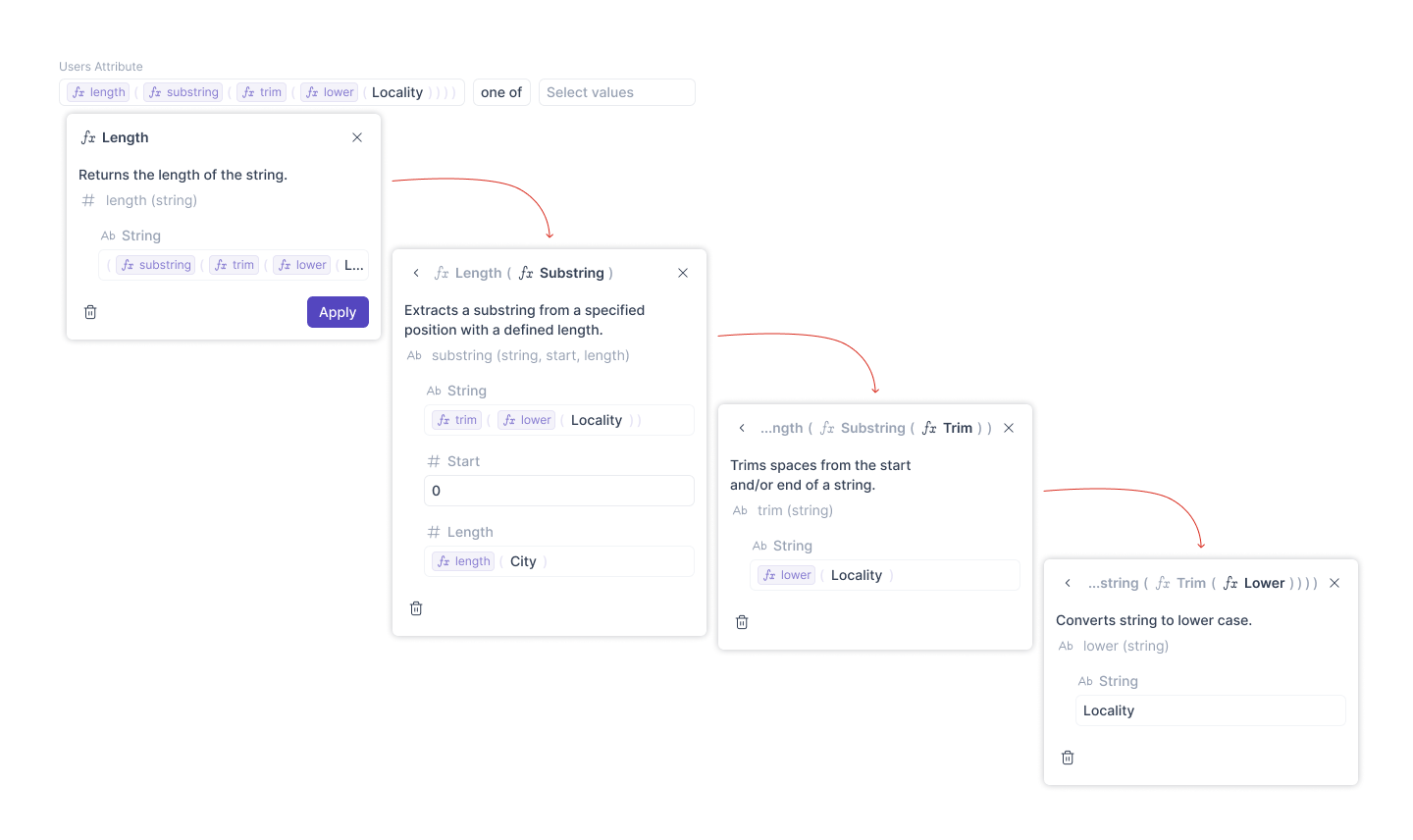
- Nest multiple functions together
The goal was to preserve the simplicity of the existing visual builder while significantly expanding what users could express through it - powerful data transformation, without leaving the Segment Builder.
Designing the Complexity
The biggest UX challenge wasn't adding functions—it was making their complexity manageable. Functions introduce multiple layers of decisions: Data → Function → Input → Output → Next Function → Comparison
I designed the experience to progressively expose this complexity while maintaining the familiar criteria-building model. A key part of this was making functions data-type aware, validating incompatible combinations, and designing the interaction model for nested functions.
Outcome
Functions transformed the role of the Segment Builder from simply filtering stored values to transforming and deriving values within the segmentation workflow.
Marketers can now express more sophisticated criteria directly in the UI, without writing SQL or creating additional data-processing workflows.